
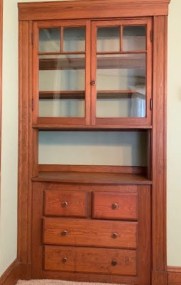
 Spring is around the corner. It could be the warmer weather, or the extended hours of daylight, or the season of Lent that many of us celebrate, but something about this time of year moves us to want to clear the clutter from our lives. Spring is a season for purging, whether your clutter is physical or of a more spiritual nature. It’s just that time of year.
The other day, I tackled my bureau. Well, no, I didn’t physically take it down. But I faced the once-organized-but-totally-neglected mess in its drawers. I can’t remember the last time I put on a pair of pantyhose, yet I’d managed to stuff at least a dozen pairs into a shoebox-sized bin in the top drawer. Fashionable scarves that I haven’t worn once since this pandemic began were squished into a second bin. Socks and belts and random boxed jewelry filled in the spaces between the bins. And that was just the top drawer.
Everything came out of the drawers. I vacuumed them out and then neatly put back what I decided to keep. I could go into detail about how I made those choices, but that’s a subject for another day. And not the point I want to make today. Instead, what I found interesting, was that when I’d finished, more than half of the large, deep bottom drawer was empty. And my immediate impulse was to figure out what I should put in there. Surely I had other spaces that I could clean out and better organize, transferring some of their contents to this mostly empty drawer.
But I left it mostly empty, instead.
What was it about an empty drawer that made me uncomfortable or dissatisfied? Why do we always need to fill the empty spaces? I don’t think there’s an empty drawer or shelf anywhere in my house. Why is that? I saw an ad on tv the other day for a closet-design company. The poor people in the ad needed help because they had too much stuff and no where to put it, so the closet designers solved their problem by creating a wonderfully organized space for them. Now they had room for all their stuff. And more! How satisfying. But, I thought, what if they just got rid of some of their stuff instead? We’re so programmed to not consider that option. But, it is an option.
I wonder, if you and I looked around our homes today, would we find an empty drawer or shelf or cabinet or closet or tabletop? Or do we just spread our stuff into every available space, buying something because it will fill that one empty spot? How would you feel if you emptied one of these spaces and left it empty? Would it feel great, at first, but then feel like an itch that needed to be scratched? A void that needed to be filled? Why? I’m not trying to answer that question here. I just find the question very interesting.
You?

 Chapter 3