
 Advent is a season of hope.
For Christians, it’s a season of anticipation and preparation, getting ready to celebrate the birth of Jesus Christ. We believe that God took human form and came to show us immense love. By participating in Advent, we hope to ready our hearts and homes to welcome more of that kind of love into our lives. Because love is the bottom line, isn’t it?
I’ve been decorating my house this past week, as I’m sure many of you have been doing, too. I started thinking about hope and how our choices of decorations can reflect hope. I’ve also been watching the news, which, again, I’m sure many of you have also been doing. Hope is sometimes harder to find there. But not impossible. Here are four signs of hope that caught my attention this week. Maybe you can think of others.
A Covid-19 vaccine. Several companies have been working like our lives depend on it (because they do) and they’ve finally developed versions of a highly effective vaccine. Distribution is about to begin. Of course, it won’t be immediately available to those of us who fall into the lower risk category. But the end of this devastating pandemic is in sight. If that’s not reason to hope, I don’t know what is.
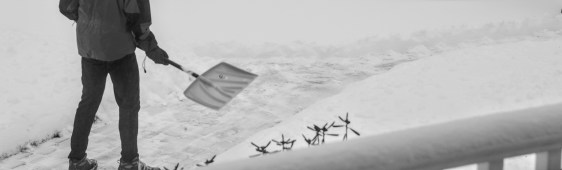
Snow. I usually start my holiday decorating by adorning our windows with snowflake stick-ons. Then, I  pull out every snowperson decoration I own. Some people set up elaborate Christmas villages on fluffy snowscapes. Others inflate snowmen or whole snowfamilies in their front yards. I live in New England, which means there may be snow on the ground for Christmas, but I’ll bet that people in warmer climates still use images of snow in their
  decorating. Why? Is it because we love snowstorms and shoveling and icy road conditions? I think not. It’s because there’s beauty in snow. And fun. So, we choose to celebrate the good over the not so good, when it comes to snow. We hope for the beauty of a quiet snowfall or the exhilaration of building snowpeople, instead of clinging to the downside of a snowy season. That’s hope in action, in my opinion.
Lights. I like to wrap my Christmas tree in all white lights. It makes me think of a starry sky. And many houses (not mine ;)) are draped in a variety of colorful lights. Some people put electric candles in their windows. Locally, there’s even a zoo, a motor speedway, and a national shrine each boasting light displays worth traveling for. It’s a dark time of year in the northern hemisphere, and celebrating with lights reminds us that darkness, both literal and figurative, is temporary. There’s hope for light at the end of whatever your dark tunnel might be.
Evergreens. Whether you bring in a freshly cut pine tree and pine  branches, or you put up a fake tree and light a pine-scented candle, we gravitate toward evergreens in our decorating schemes. Why? This one’s fairly obvious, especially for those of us in colder climates. Trees, bushes, lawns, and gardens go dormant for the winter. A lot of what we see outdoors looks dead. But evergreens remind us that there’s still life in our landscapes and that spring will come again. For me, the smell of fresh pine is the smell of hope.
My decorating isn’t done yet, how about yours? There are still a few weeks before Christmas. 😉 I intend to enjoy every minute of them. Advent 2020 has given me the unexpected gift of slowing down enough to appreciate the season and to savor the hope it embodies. My hope is that you each find that same gift this year. God bless.





 Chapter 3