The Advent of Advent

I can’t believe it’s December already!

The gardens have been cleaned out (mostly) and the last of my butternut squashes are sitting in a sunny living room window. The temperatures have recently dipped below the freezing mark and we’ve even had a dusting of snow here in southern New England. Halloween and Thanksgiving Day have given way to the mad rush of Christmas preparations.

In the midst of making plans and checking lists, the season of Advent tends to slip by unnoticed. Not because it’s not important. But because our sights are set beyond it. Let’s pause and take one season at a time. It’s really worth it to slow down and appreciate the present, even as Advent celebrates the hope of things to come. One thing that’s helping me focus on Advent is a series of videos arriving daily in my inbox. They’re from Dynamic Catholic’s Best Advent Ever program.

A few days ago, one message really hit home for me. In it, Matthew Kelly talks about how life doesn’t usually turn out the way we expect. He calls it the unexpected life. (Watch it here.) For some reason, we judge our days based on how closely they adhere to our expectations. We make plans, write lists, schedule our time, and relax into a general sense of control over our lives. And we get frustrated, disappointed, or even irate, when things go sideways. What if we started each day instead with the notion that the unexpected is the rule, rather than the exception, of daily existence? Would that change our reactions? I think so.

The very day I saw that particular video was a day I needed its message. I emerged from a funeral mass for a friend’s mother only to find several text messages from my mother’s caregiver. I needed to take my mother to the doctor asap. Her doctor couldn’t see her and so instructed me to take her to Urgent Care. And that’s where I spent my entire afternoon, waiting for my mother to be seen, answering her repetitive question “Why are we here?” every twenty minutes or so. I found a new source of patience in the acceptance of the truth that anything can happen on any given day.

So, while Advent is about the coming of Christmas, it’s also about taking one day at a time. It’s about being present in the moments and appreciating the wonder and messiness and unexpected nature of life. And whether Advent and Christmas are faith celebrations for you or not, everyone could benefit from the messages they embody. So, happy December! And may you find peace in your unexpected life. 🙂

Garden Project: Getting There

In Garden Project: New Beginnings, you can find a description of the beginning of this project.

Assembling four 4′ X 8′ boxes out of cedar was only the first step. I needed these garden beds to be critter proof if they were going to serve their purpose. So, I ordered a roll of hardware cloth, which isn’t cloth at all. It’s metal fencing, similar to chicken wire, but stronger. I decided on the roll with 1/2″ mesh — great for rain and sun and bees to get through, but not so for the smallest of chipmunks.

All this hardware cloth needed to be cut to size and stapled onto the bottom of the boxes as well as onto the frames of the cages (more about them in a minute). So, I bought a new wire cutter and went to town on the hardware cloth.

I had a couple of old Craftsman hand-staplers, but trying to find staples for them turned out to be more of a headache than it was worth. They seemed better suited for affixing yard-sale signs to utility poles than metal fencing to a 2″ X 6″ anyway. My daughter had a newer, more sturdy stapler. Hers was better suited for the job, but hard to use (with my small hand).

Thankfully, a neighbor stepped up and offered the use of their pneumatic staple gun. A total game-changer!

The cage designs took a little thought. They needed to be sturdy enough to hold up under the hardware cloth, but not so bulky that they’d block sunlight from the gardens. To save on both wood and fencing, I decided to make two of the cages about eighteen inches high, since they’d be protecting strawberry plants and other low plants, like carrots, beets, and leafy greens. I could even put squashes, like butternut or pumpkin, under these low cages.

Two of the cages needed to be high enough for taller plants. These would be four feet high, since that’s the width of the hardware cloth and also half the length of the boards I could buy for the cage frames. Would I do doors on the tall cages? That seemed like a lot of work and would require even more wood to frame the doors. Instead, I settled on removable front and back panels, so I could access the plants from both sides.

Picking through 1″ X 2″s and 2″ X 2″s to find the straightest ones was even harder than finding straight cedar boards. We (my daughter and I) settled for mostly straight. We quickly realized how many metal mending brackets (straight ones, L-shaped, T-shaped, and corner ones) we’d need to make these cages stable. Some brackets came with their own screws, but others left us rummaging through our own supplies of random leftover screws. We started with the low cages.

Again, the work was subject to the weather, but we managed to get the two low cages built and covered with hardware cloth. The tall cages aren’t complete, yet.

Meanwhile, the cedar boxes needed to moved off our back deck to clear a space for building the cages. The old garden still needed to be dismantled, the new beds filled, and the strawberries transplanted.

It snowed the day my order of loam and compost was supposed to be delivered. So, they delivered it the following day. The compost was in great shape, but the loam was soaked and clumped like clay. Disappointing, not to mention heavy and hard to shovel.

The snow day gave me a chance to fix a casualty of too much bending over to staple hardware cloth.

Each 4′ X 8′ garden bed took hours for me to fill by myself. The first two took a full day each. I got help with the third one. And the fourth is still sitting empty. A lot of measuring and leveling was included in placing the beds and prepping them to be filled. The yard slopes (as most yards probably do) so a two-tiered garden space made sense. I used cinder blocks that had bordered the former garden space to divide the levels.

The strawberries, which have begun to flower, have been transplanted — just in time, apparently. Some animal (deer maybe?) has started nibbling. The small cages need to be attached with hinges as soon as possible.

Hopefully, in the next week or so, the tall cages will be done so the peas and a few other early crops can be started. Eventually, when all the veggies are safe in their caged beds, I’ll be able to clean up the area and top it off with some attractive mulch and flowers. Stay tuned!

Garden Project: New Beginnings

I haven’t done much blogging lately because all my creative energy has been channelled elsewhere. In other words, after a discouraging growing season in 2020, losing too many battles to the local squirrel, chipmunk, deer, and groundhog populations, I decided to go on the offensive. I’m building new garden beds.

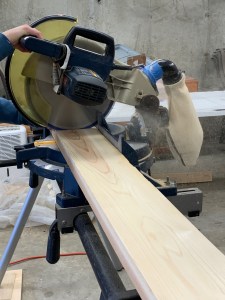
Ideally, I wanted a totally enclosed gardening area, complete with a roof, to keep out those pesky invaders. But the price tag was absolutely laughable. So…plan B. I designed garden beds topped with cages instead. And I decided to build them myself. OK, not really all by myself. My daughter is helping me. She inherited my father’s chop saw and has it set up in her garage. She’s already used it to build a kitchen table, so I thought I’d count on her help and expertise. 🙂

My design consists of 4′ X 8′ beds with cages on top. The space I cleared in my yard can fit six of these beds, but I thought I’d start with four. Finding and buying lumber was my first step.

I wanted cedar, but no place had any 2′ X 10’s or 2′ X 12’s, so I settled for 2′ X 6’s that could be stacked for the sides of the beds. Our local lumber suppliers didn’t have these either, but they were available in a neighboring state. Road trip!

Picking through lumber to find twenty-four fairly straight eight-foot boards was no easy task. We, my daughter and I, found eighteen decent boards at our first stop. Then, we travelled another fifteen minutes north to buy an additional six. My trusty fifteen-year-old minivan transported the lumber back to my daughter’s garage. There, I measured and she cut, to make sixteen eight-foot boards and sixteen four-foot ones.

I shopped around online for garden bed corners and found these metal ones at Plow and Hearth. I bought them for the finished look they’d provide, but they turned out to be the perfect way to join imperfect lumber into half-decent rectangular boxes.

But first the wood needed to be treated. I used a poly-whey, food-safe stain for the outside and a food-safe internal wood stabilizer for the remainder of each board.

Finding a few dry March days in a row, above fifty degrees fahrenheit, in New England, was a challenge, but it finally happened.

And I managed to keep all the wood dry until it was stained and stabilized and ready to assemble into garden boxes.

So far, so good! Next time, I’ll show you the cages we’re building and, when they’re all in place, I’ll show you the final product. Until then, happy spring!!! 🙂

A Taste Or Two Of Spring

You know that little thrill of licking brownie batter off the spatula just after you put the pan in the oven? (Oh, is that just me??) Anyway, we all like to sample a bit of whatever we’re whipping up in the kitchen, don’t we, — especially if we’re cooking when we’re hungry? It’s so hard to wait. And that’s how this past week felt to me with the tease of a couple of warm March days. I could taste spring!

My first taste involved one of my daughters and the mitre saw she inherited from my Dad. (Stay with me here.) We’re going to be building new garden beds for my backyard this spring. Several weeks ago, we took a road trip to the only two Home Depots in the area that carried the cedar two-by-sixes we needed. Long story, short, we spent an hour or so cutting some into four-foot lengths and trimming the rest to eight feet. We’ve got some work ahead of us still, but seeing them all cut excited me. I can’t wait for gardening season!

The second taste involved another of my daughters. She lives almost two hours away and works as a baker. For both of those reasons, we had’t seen her in person for months. I’d been waiting for decent weather on one of her days off, so we could spend some time outdoors together. Last Friday, the promise of temperatures in the high fifties, or even maybe sixty degrees, was just what we needed. And it did indeed turn out to be a beautiful day!

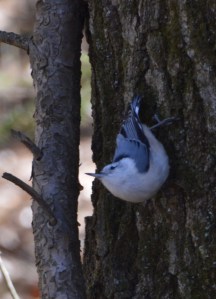
We hiked a trail at a local state reservation. We watched for birds and talked a bit about photography as she tried out the new camera she got for Christmas. It was midday, so bird activity was minimal. After walking for a while, we actually thought we might not see any. But then a few nuthatches and chickadees flew right across in front of us and sat chirping in the trees for several minutes. We walked on and saw a large black-ish bird fly by at a distance. When we got to the spot, we discovered a pileated woodpecker. A second one flew by a few minutes later. Even though they moved too fast and stayed partially out of view, I took one poorly focused picture — enough for proof, if not for hanging on a wall. All in all it was fun and left me pining for more warm spring days.

The Art of Snow Shoveling

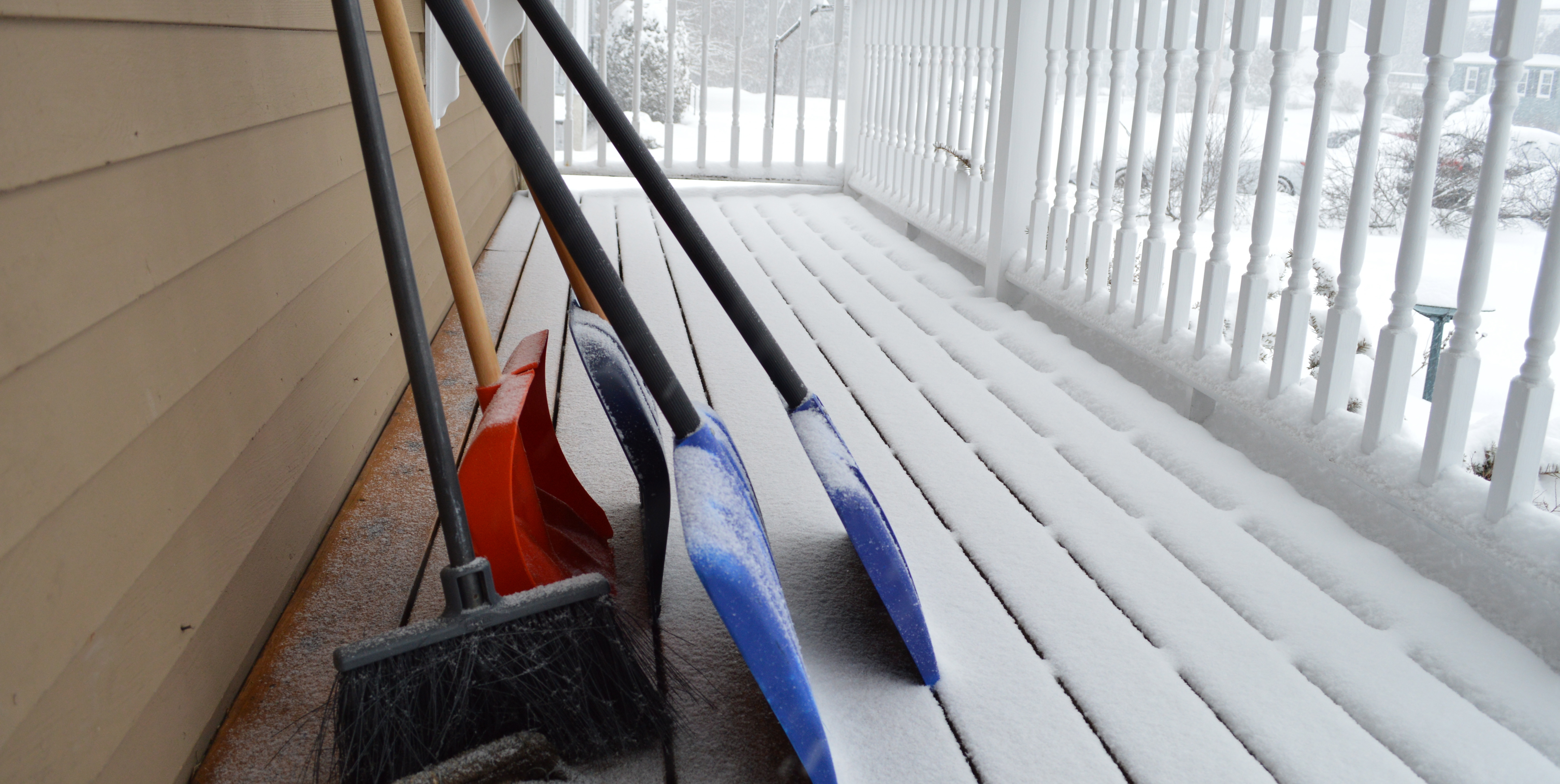
DSC_0202Regret is an unfortunate side effect of twenty-five years of parenting. I definitely could have done some things differently. For example, I regret not insisting more often that my kids help with the snow shoveling. That’s how I was raised: if you’ve got two arms and two legs, then you’d better get yourself outside and start working! Maybe that’s exactly why I didn’t. Anyway, most of the time I just couldn’t be bothered with the extra effort it took to request, demand, coax, and threaten them. So, between my parents’ resolve and my own stubborn approach (it’s easier to just do it myself than to ask for help) I’ve had plenty of experience with a snow shovel.

Here in New England, there seems to be little consistency in the weather from winter to winter. Some years, we get to April and are still wondering when winter’s going to start. Other years, like this one, we get pummeled week after week for months on end. And, of course, it’s the first winter without a single kid living under our snow-covered roof. For the first time, I’ve actually entertained the idea of owning a snow blower. But not really. Shoveling’s good exercise. At least, that’s what I tell myself. And there’s a bit of a mental challenge to the task, as well. That got me thinking, as I attacked a fresh blanket of snow the other day, about what jewels of wisdom I could bestow on those less experienced (like my own kids).

#1 Divide and Conquer

A foot of snow in a driveway that can squeeze 6 cars during a street-parking ban may be daunting. But if you employ the divide and conquer strategy, as one might with any of life’s overwhelming obstacles, the task can be broken down into manageable pieces. Begin by parting the area down the middle. Push the snow away from the center, toward the edges. Then scoop it up and throw. If it’s heavy, wet stuff, instead of light, fluffy stuff, you may need to part it into thirds or even smaller portions. The point is it’s doable when taken in small doses. Don’t give up.

#2 Listen to Your Heart

If all that hard work gets your heart pounding, take a breather. Literally. Stand still and enjoy the view. Lean on that shovel, take a few slow, deep breaths and watch the snow fall. Nothing will be accomplished if you end up face down in a snowdrift. So, stop for a moment and reminisce about that snow fort you built when you were a kid — the one that made you feel like you were a lone explorer in the great frozen wilderness. Savor the muffled silence that a blanket of snow creates in a loud and busy world. Wait for your heart to slow down a little before you dig in again. It’ll be worth it in the end.

#3 Work With Nature

If it snows all day, don’t wait until it’s over to tackle the shoveling. It’s easier to clear 4 inches now and 4 inches later, than 8 inches all at once even later. And your back (or arms or knees or wrists or whatever body parts that regularly protest) will thank you.

If you’ve waited until the day after the storm to finish the clean-up and the sun is shining, let it work for you. If your significant other had to drive over those last few inches of snow to get to work, leaving packed tire tracks in his wake, don’t exert a lot of needless energy scraping to bare pavement. Remove what’s easy and let the sun do its job. Come back to the nicely melted patches later. Smile and appreciate the power of the sun.

#4 Think Ahead

If it’s only December, fling that snow as far as you’re able. It’s mighty difficult to heave it up and over six-foot snow banks in February! (Especially if you’re only five feet tall!)

Don’t put off ’til tomorrow… Tomorrow might bring rain, turning it all to slush; or a 5-degree day, making it a driveway full of pretty white concrete; or tomorrow may bring MORE SNOW!  (Is it spring yet?)

I could go on. No, really, I could. There’d be “Choose Your Weapon,” spouting advice on choosing the right shovel for the job. And “Do Unto Others,” encouraging you to be extra helpful to that next door neighbor when she’s stuck ( I mean her car is stuck!) in a snowbank and maybe her son will offer to use his plow to clear out the end of your driveway. You get the picture.  I’m sure some of you who are more experienced shovelers could even add your own tidbits of advice. In the meantime, hopefully a relatively short meantime, happy shoveling!